2026-02-13

Emotion-of-your-choice Valentine's Day!

.

Just realized this is a perfect Valentine's Day collection: Youth, Having Babies, Disenchantment.

Enjoy! 

006) Midville High: Comic Caper Collection by Matt Blair, finished February 5

Apparently Mr Blair started making these comics about high school when he was in high school and continues to make them now as a teacher himself. (The characters stay in the 1990s.)


This near-300pp collection has plenty of hijinks with bits of satire and parody. He's publishing them himself so some things like line-darkness aren't what you'd expect if, say, Fantagraphics had done the release, but the reading is fun and what more do you want? At times, it's excellent. There are moments where I was surprised he didn't get picked up by a syndicate or something. And he has the skill to produce a more high-schooly version of, like, Big Nate or something. I imagine he prefers control and is satisfied with the indie life but he has the chops to go big were that the goal.

But I don't know that a contract with Random House or something would be an improvement. Sure, the blacks would be blacker and a good editor could push him to higher states of excellence but there's a lot of pleasure in this handmade labor of love, and the purity might be lost in a shinier version. 

saturday and thursday 

007) Guarding the Moon: A Mother's First Year by Francesca Lia Block, finished February 10

It's funny it took me so long to read such a slight and readable book. I felt like I was devouring it at great speed—but then something would interrupt and it would end up under a pile and weeks would pass....


But I loved the book. Block's beautifully fluffy way to warping time and relationship on the page to match the feelingof loving another person was never better suited than to the true story of loving her first baby. Everything is fluid and nothing is stable and we are tired and mad and deeply in love and yes this is exactly what it is like to have a child,

It's terrific. 

eight months 

008) The Sellout by Paul Beatty, finished February 13

This is gonna be a multiparter, not all of which are about the contents of the book. Buckle up.

Memory is a fallible thing: I have a very clear memory of my first AP Lit training in room in downtown San Francisco, the summer of 2008. On the last day, there were a bunch of books on the back table. Of course I took some. Among them were at least a dozen copies of The Sellout, its flourescent-pink accents attracting the eye. They were there because CollegeBoard wanted to pressure us to teach more books like this—humorous, as I understood it.

Years pass. I have most of my copies in a drawer at school, waiting for me to read the one I have at home. The one I have at home is on a shelf beside the front door. The visible pink on spine fades out to a barely-there orange you can only see if you put your eyes right next to the paper.

I am embarrassed it is taking me so long. This was a NYTBR 10 Best! This got an award from th National Book Critics Circle Award! NPR called it a masterpiece! It won the Man Booker! It's slathered in exorbitant praise, mostly about how funny it is!

Anyway, I finally pick it up because this is the year I'm only reading books I actually own and it's actually working and one of the first things I notice is the copyright date: 2015.

Huh.

So....

I think my memory is correct. Except I think it's two memories combined.

I also suspect that contrary to what were told, it was less CollegeBoard suggesting we teach The Sellout and more Picador a subsidiary of Macmillan itself a subsidiary of the Georg von Holtzbrinck Publishing Group. Regardless, I would never.

Culturally responsive pedagogy—possible? I've been teaching long enough that I can note when things suddenly change. My two best examples are as follows:

I frequently teach Frankenstein to AP Lit and, when I do, we often watch a movie after the test. Most commonly voted for is the Boris Karloff–starring masterpiece, but occasionally something else gets chosen (especially when I'm teaching multiple classes and don't want to watch the same movie more than once in a day), for instance Young Frankenstein. Which is a great movie although there's a played-for-laffs rape scene that I've always hated. But other people find it funny so hey, maybe I'm a prude for not playing rapes for laffs myself.

Anyway, kids did laugh at that scene, same as their elders. And then, one year, like flipping a switch, they did not. They were deathly quiet and uncomfortable. And so it's been ever since. Which is simpler because it's easier to talk about it when we start on the same page.

The other big example, also from AP Lit, is August Wilson's brilliant Fences. Love that play.

When I started teaching it, I heard scuttlebutt from the online student-services center, that my Black students were grateful that we were reading it and for the way I was handling the plays language.

Then, one year, the scuttlebutt changed. I was getting forwarded complaints. That reading Fences was leaving my black students deeply uncomfortable and angry, that they felt by bringing its language and characters into the classroom was feeding racism among their peers and telling lies about what it means to be Black.

For a few years, I tried changing how we discussed the play, but the complaints intensified. Finally, I dropped it. I now have not taught it for several years. I miss it.

In fact, as time goes on, to keep students happy, I try to avoid teaching anything "culturally responsive." I teach almost entirely dead white Americans and Brits. This quarter, for instance, our primary texts are Steinbeck, Vonnegut, and Shakespeare. And, if everyone is not happy, at least they are not complaining.

I'm not exactly sure what's gone wrong, but I suspect part of it is depth. Fences might be more acceptible if I were also teaching The Emperor of Ocean Park and The Hundred Thousand Kingdoms to balance out the historical-fiction-where-racism genre. The problem of course is I should really also be teaching at least three novels exploring Tibetan-American culture and at least three novels exploring Mexican-American Culture and  at least three novels exploring Japanese-American culture and at least three novels exploring Pakistani-American culture and at least three novels exploring Chinese-American culture and etc etc etc and you see quickly that the semester is not long enough. I hate this.

(I do have a few ways to mitigate the lilywhiteness of our major texts but the fact remains that the average actual single-author book we read and discuss as a class is more Jane Austen than August Wilson.)

Relevancy to the book: Oo boy.

So this is a book decidedly about racism. Racism here in 21st-century American. And it's not just "about" racism. It enacts racism in just about every imaginable way. It insists on placing racism literally front and literally center. Our main character, a Black Angeleno, finds himself owning a slave and instituting segregation.

See, his town has been taken off the map and segregation is part of the trick to bring it back. And not only does it, but the kids believing their school has been segregated leads them to instantly begin to excel. They're on their way to being the third-highest-achieving school in the state.

And of course I hate that but as I look back at what I've already written and am I inadvertently arguing the exact same argument?

The first half of the book I was mostly annoyed. I'm not pretending that post-racial America was achieved or anything, but it's so reactionary and angry I had a hard time finding my way in. And I wasn't sure I was welcomed in, regardless. I did laugh at a couple of the jokes, but most of them—I recognized that they were humor-shaped but I wasn't at all certain they would actually be funny to any slice of America.

The book starts at the end with the opening moments of our protagonist before the Supreme Court with normally taciturn Clarence Thomas losing his mind, cursing out our protag, calling him awful things, and finally collapsing into his seat with.... Well, this isn't the sort of blog that quotes what Clarence Thomas says.

And he's not the only real person to make a show here. Bill Cosby, Colin Powell, and Condoleeza Rice get raked over the coals but they also learn to Crip Walk. Barack Obama is weirdly a source of hope and pleasure but also no better than those other three. But time is weird here because we're both in his presidency and years before simultaneously. But Beatty isn't superconcerned with accuracy.

Or...sometimes he is. Some of what he says about geography or farming or surfing is so exquisitely detailed it's impossible to believe it's not true. But then our protag will plant an apple tree which'll die two days later but have apples on it. To which I express doubt.

I would argue back at myself that this isn't the kind of book to which accuracy matters except then why spend so much time getting us to believe it is accurate? And learning from this book that Stalin executed soldiers photographed with Americans when the two armies met on the Elbe for "fraternizing with the enemy" while I'm teaching Slaughterhouse-Five makes me want to share that tidbit but...given some (granted, casual) googling, I'm not so sure that's true.

This is a book which makes big claims on telling the truth and pumps itself full of realistic details. But this is also a book which proudly declares it couldn't care less about what's true as the fact is the facts matter so much less than the truth of things. As in "How to Tell a True War Story."

Which makes sense. One thing The Sellout makes clear is racism is war. Even if most people won't admit their in the fight.

So you hated it. No. No, I did not. It wasn't really to my taste and I wasn't sure the book wanted me reading it and for much of it I wasn't really enjoying myself and when the satire left the locals and went national I found it more silly than provocative, but—as it wrapped up, I found myself deeply moved.

The final pages with the restoration of his hometown and his memory of a standup comic took all the ugly and the chaos and the nonsense and wrapped it up with a humanist bow. The protagonist, whom I'd always found interesting, compelling, and genuinely human, ceased satirizing himself and his certainty, and opened up to show that, even he who weilds racism confidently as a both scalpel and chainsaw, doesn't know what's going on or what it all means.

I do sometimes wonder if we could all embrace our ignorances publicly and humbly we mightn't be a bit better off.

I don't know if that's true.

But as long as we all know what's going on, we never will. 

about three weeks 


Previous books of 2025
(and years more distant)


The first five books of 2026

001) Red Harvest by Dachielle Hammett, finished January 3
002) Never Let Me Go by Kazuo Ishiguro, finished January 14
003) Snoopy's Guide to the Writing Life , finished January 16
004) You Are Too Much, Charlie Brown by Charles M. Schulz, finished January 19
005) Ice by Anna Kavan, finished January 24


PRIOR YEARS OF BOOKS

2007 = 2008 = 2009 = 2010 = 2011 = 2012 = 2013 = 2014 = 2015
2016 = 2017 = 2018 = 2019 = 2020 = 2021 = 2022 = 2023 = 2024 = 2025


2026-01-31

Starting the year off right with zero movies literally about Columbian hippos but, metaphorically, maybe ALL of them are?

.

Hard to believe this is all one month. Back at the beginning of January the whole family was home and some movies got watched that probably wouldn't've without the influence of the oldest. Then The Testament of Ann Lee proved a fulcrum of some point. Since seeing it, I've listened to the soundtrack who knows how many times. It has infiltrated every hour my mind is awake. (I cannot speak with confidence of the sleeping hours.)

I've also spent the month writing (mostly in my head) a best-of-2025 post. But now January is over and I still have not done so. Is it to late?

Anyway, you can tell the month's end caught me offguard as I've already posted something today.

Watch out for January, friends. It's got the tricks.

.

HOME
something college
students know
Help! (1965)

Our dvd problems continue. This time, the Help! dvd (and apparently onlythe Help! dvd) caused VLC to utterly freeze up. I've never seen something so peculiar.

Anyway, so we pirated it. (Is it pirating if you own the dvd? We've watched it many times but it's still in perfect condition

Not a lot of intact comic groups anymore. Laurel and Hardy, the Marx Brothers—all long, long ago. The Beatles (the greatest rock group in the history of the world, but as if that weren’t distinction enough, the Beatles were the greatest comedians in the history of rock) and Monty Python are also long ago, now. There've been a few nearlies over the years, but I wonder if the Beatles are the proper model. A Barenaked Ladies movie circa 2000 might have worked?

I think a group that could pull this off is rarer than rare, but it might have a better chance of working than anything else. Is anyone looking?


HOME
Prime Video
The Naked Gun (2025)

No doubt this would reward rewatching. I caught at most half of the background jokes? at most three-quarters of the in-credits jokes?

Anyway, it was funny but no doubt would have been waaaaaay funnier in a packed theater.


HOME
Prime Video
Eephus (2024)

This is . . . like if Terrence Malick made a baseball movie. Only with better jokes and also it's sometimes a horror movie and the monster is middle-age.

It was very good but I don't know just what it will become as it settles into memory.

The Big O—the only person who watched it with me—says he won't know until we watch it again next year.

But he enjoyed it. Sometimes twenty-two is old enough to feel the malaise of age.


ELSEWHERE
Tubi
In Search of the Last Action Heroes (2019)

Don't know if the book I read big pieces of at the library once is related (they're quite different, for all their similarities), but that's what got me to click on it. ||| UPDATE: the final

The movie's about the sort of action movie that came out of the '80s (think Stallone, Schwarzenegger) and has interviews with writers, composers, actors, etc. It takes them from the appearance of the genre, through theaters and video shelves, until movies like Last Action Hero showed the time was coming to an end and movies like Speed (actors taking over for overbuilt monsters), Jurassic Park (effects taking over in-camera), The Bourne Identity (shakycam taking over visibility) gradually ending the era.

It's long but easy to watch in parts while doing other things. Even though I haven't seen most of thost movies, I liked it!


HOME
dunno
A Town Called Panic (2009)

Lady Steed and I got back just as the kids had ten minutes left in this movie but I wanted to count it anyway just so I could tell you, in case no one ever has before, how delightfully mad this movie is. You could compare it to Looney Tunes or the Marx Bros. but honestly, A Town Called Panic genuinely might outdo them both. It's as mad as Wonderland but so much funnier.

Anyway, it's brilliant and I love it and I bet you would too.


HOME
our dvd
Guys and Dolls (1955)

Okay. I'm about to come off a big square.

Yes, the end of this movie pastes on a nice all-god's-critters-got-a-place-in-the-choir moral—and I'm all for that moral—but that ending's a lie, a cheap facade, because the entire rest of the runtime celebrates misogyny and ugliness. It's a pure embrace of sin (by which I mean both evil and foolishness) and all the fun bits and entertaining spots don't hide the fact that, in the end, no one in this movie is treated well by the story's creators. The women in particular are straightout abused and turned into nothing more than coin. The moments that are supposed to show otherwise do not. And then men aren't much better though instead of being abused by others they are abused by their fallen state and shallow writing.

They says women deserve respect and they have inner lives. But all they do is display breasts and hip/waist ratio in endless variety. They claim men may be saved. But they make gambling the only time they dance—and only the silly fat man puts on the red uniform. The show the most noble of the men as noble simply because he doesn't take advantage ("") of the woman he already got drunk. Et cetera, et cetera, et cetera.

It's been a while since I was so appalled by such a well made movie.

I guess now I've opened myself up for everyone who loves it to explain to me why I'm wrong.

Bring it on.


THEATER
Century Cinemark Hilltop 16
The SpongeBob Movie: Search for SquarePants (2025)

I've now seen three of the four SpongeBob theatrical movies. While I laughed a good amount, this was easily the least of the three.* Honestly, I was kinda bored through most of it. And whatever the lesson was supposed to be, I doubt I learned it.

* Or so I thought. But I went back and read the extant reviews and it appears maybe I had a similar reaction to one and two as well.


HOME
library dvd
The Holdovers (2023)

Watched with wife and sontwo, both of whom liked it much more than me. I kinda thought it was typical holiday heartwarming stuff. Not too cliche or anything, but not really remarkable either.

Perhaps this is a commentary on me.

I won't be surprised if, now that we've finally see it, there's a desire to return to it on a following Christmas. Will I come around??

Incidentally, recognizably Mormon character and a carol by the Salt Lake Children's Choir directed by Kurt Bestor. Clearly this is a Mormon film.


THEATER
AMC Bay Street 16
The Testament of Ann Lee, or, The Woman Clothed by the Sun (2025)

It's 11:33 and I don't have to get copy to my editor to make the morning paper, so let's just admit I'm going to let this one sit.

Perhaps ironic to go see this the day it didn't get any Oscar nominations, but the heck. Sound deserved attention. The music. The acting. The camera work is terrific. All I can say is F1 had better be the greatest car movie ever made to get a Best Picture nod over Ann Lee.

A lot has been made of Amanda Seyfried's performance and rightly so. I think part of what impresses people is how she's very willing to appear human. She looks her age, for instance. It's not a glamour role. The bits of nudity are not Hollywoodized. But I'd also like to shoutout Thomasin McKenzie who, did she not have a recognizable voice and had I not knows she was in it, may have been unrecognizable. I'm used to her always appearing like a cute ninetten, yet here she looks like a person who's been through and going through it. Even when her character was young, she was plain and ordinary.

But the ordinariness of these people helps make their spiritual prowess the stuff of real life. I don't particularly want to be a Shaker after seeing this, but I'm filled with respect for Ann Lee, her accomplishments, and her people. Next time D&C rolls around, the jokey way Ann Lee often gets discussed WILL NOT STAND.

But speaking of random Mormon connections, Alan Sparhawk's one of the credited singers and, I must tell you, after I post this to Letterboxd, I'm going shopping for the soundtrack/score.

Anyway, it's an incredible movie. It felt a bit long in the watching but I will never question the worthiness of having spent all that time in this world.


THEATER
The Roxie
OBEX (2025)

I like Albert Birney. Watched Sylvio thanks to a single-paragraph review I read somewhere; loved it; haveprobably shown it to 300 high schoolers over the years. Strawberry Mansion sounded cool and was the same team so I made it an option for the dystopian unit; one class chose it; we had incredible conversation.

OBEX may be the weirdest of the three and I don't see how it could tie into anything class-related, but it's one heck of an experience and—bonus—the first seen in theaters! But even the Roxie's audience was perplexed. I wish you could have been there with us as we, as a group, negotiated whether or not we were going to clap for this thing.

I like the Eraserhead-meets-Zelda description IndieWire put out (what first captured my attention, before I knew who made it), but I think a better comparison might be the very different Hundreds of Beavers. Although that's an uproarious comedy (OBEX is merely funny), Beavers isn't just another videogame-influenced b&w film—it too is filled with existential dread and inhuman forces looking to destroy.

I guess b&w existential comedies with videogame trappings and sweet/cheap effects are having a moment.

I'm for it.


THEATER
Century Cinemark Hilltop 16
Hamnet (2025)

Holy smokes but are kid actors great these days!

Talk about the book led me to think I would find it an insufferable mess of manipulative, historically sketchy melodrama.

Talk about the movie led me to think that it was pretty good but got manipulative toward the end and you'll be crying the last half nonstop whether you're willing or not.

My actual experience included the following:

1) The film is beautiful.

2) While I dug the romantic relationship once it was established, I found its genesis perplexing.

3) The acting was excellent, up and down.

4) While I found the historical explanations of Shakespeare's career to be unlikely, hey, it's a movie, I got over it.

5) The play-within-the-play at the end fascinates me. It seems to demand some knowledge of Hamlet but also either to have forgotten some (or perhaps to have that knowledge based entirely on Mel Gibson's version?) or willing to forget some. I did love how it worked and so, again, I got over it.

6) This is quite the year for realism in birth scenes!

Anyway, I liked it quite a lot. It didn't make me want to read the novel, but it did make me want to read Stepehn Greenblatt's initiating essay.

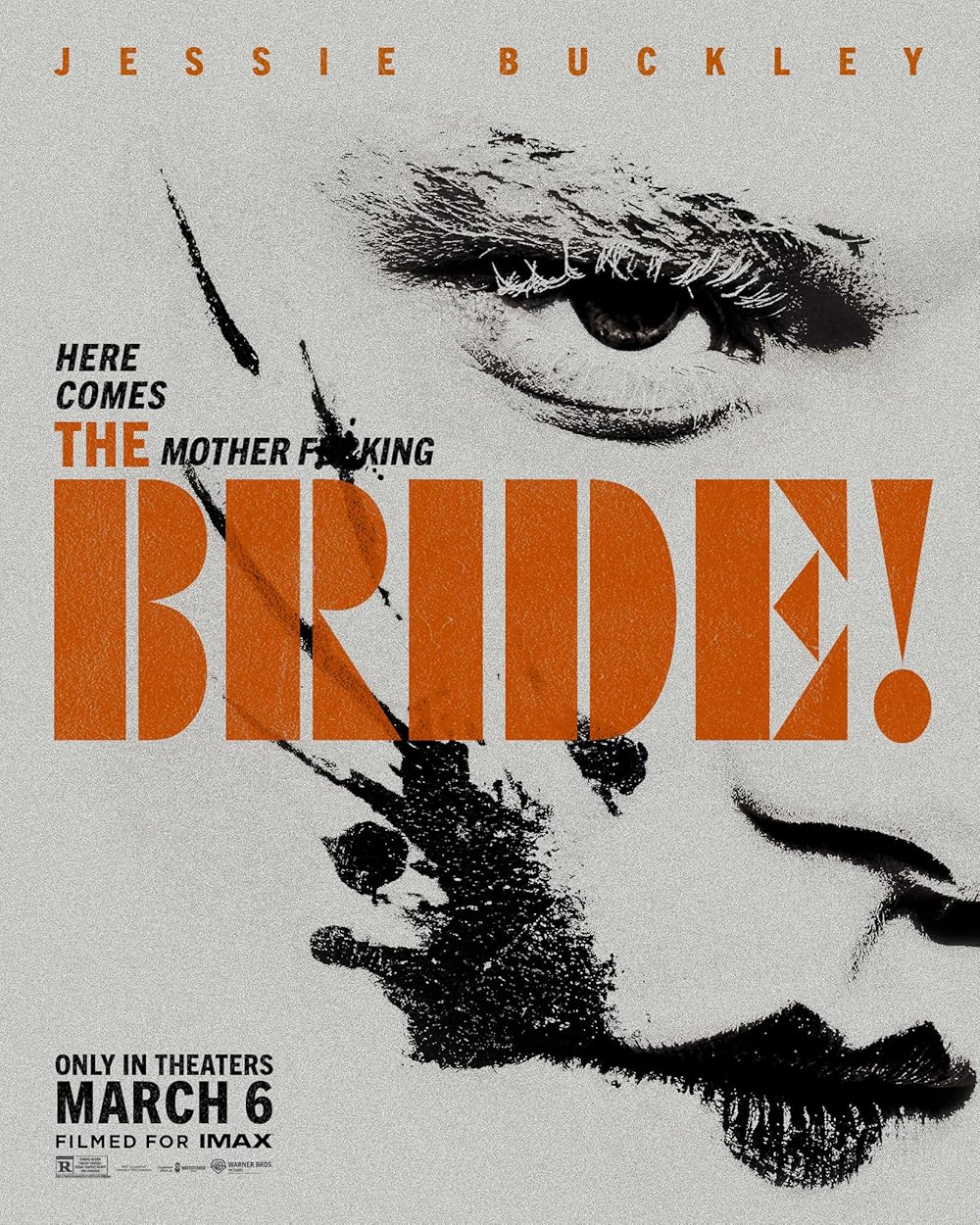
And it made me want to know more about Jessie Buckley. Who is she and what's she been up to?


HOME
library dvd
Born Yesterday (1950)

I decided I had to watch this movie when it appeared on Variety's top-100-comedies-of-all-time list, last year. I don't know about that but it was utterly charming and shockingly patriotic. It's a real movie for 2026 and I'm all for everyone giving a shot, whatever brings them to it.

William Holden sometimes looks surprisingly like Tom Hanks, but it's Judy Holliday I got the questions about.

But first, she created this role on Broadway and got rave reviews, but the studio head said no because she wasn't in movies. The director got her into Adam's Rib and etc etc she finally got the role and she was great, winning the first ever Golden Globe Award for Best Actress (musical/comedy), and then, wing the Oscar over—get this—Gloria Swanson (Sunset Boulevard) and both Bette Davis and Anne Baxter (All About Eve). Maybe it was a matter of great roles cancelling each other out, but that is one of the most stacked years of all time. Incredible.

Anyway, she plays sort of a gangster's-moll character, a former chorus girl, ignorant and unworried about her. Her fiance takes her to D.C. where he's trying to get some shady legislation passed. Her dumbness embarrasses him so he hires a guy to make her smart. But here's the thing: she takes to it.

And she's taking to it in D.C.—the seat of American democracy. And she starts getting ideas about what democracy means and how it should function. And she calls her bigshot fiance a fascist because she sees in his form of capitalism the same sort of selfishness.

And all along it's a comedy. In a different movie, maybe she ends up in a box. Who knows. But she's brave and getting braver in tandem with reading and getting readier.

So my question is this: Is she the model for Lina Lamont? Although the movie comes out only two years earlier than Singin' in the Rain, it takes place twenty years later. But they have exeedingly similar hair and dress and movement and, my word, that voice!

BREAKING

A bit of searching and I learn this:

To create the role of Lina Lamont, the silent star with the disastrous voice, Comden and Green thought of Judy Holliday, their old sketch comedy partner, and even revived some bits of business from their old act. But after Holliday won the Oscar for 1950's "Born Yesterday," they realized they'd need someone else. They turned to Jean Hagen, who'd been Holliday's understudy in the Broadway version of "Born Yesterday." For her audition, Hagen did a drop-dead impression of Holliday and won the role.

So yes. I wasn't crazy.

But it's not just the stylings. There are even echos in specific lines. But while Singin' in the Rain's version is villainous and egotistical—selfish—fascist?, Born Yesterday's version is hopeful and shows growth and curiosity and learns to care about everyone. Quite the opposite really.

(I'm almost afraid that watching this movie to often might even sour me a tad on Singin' in the Rain which would be a freaking tragedy.)

To conclude, when I started writing this I wasn't sure the movie belonged on a top-100 anything, but the more I type the more I am persuaded in the beauty of embracing comedy in the most classic sense. Not because it is funny but, because it ends in a marriage.

And, as a better writer than me once pled: Let me not to the marriage of true minds admit impediments. Because, while love is not love which alters when it alteration finds, or bends with the remover to remove—and while it may be an everfixed mark that looks on tempests and is never shaken and is the right star for every wanderer, love is not time's fool. That's one thing Born Yesterday did that I don't think I've ever seen before. Our romantic leads kiss almost immediately but then they don't proceed. She even assumes the moment is gone. See, love doesn't alter as the hours and weeks pass but, instead, bears out even to the edge of doom. So whatever love is, when it's right, change only makes it stronger.

If this be error and upon me proved, I never writ, nor ever loved.

But check out Born Yesterday. It's not just a normal romcom, for you and your lover. It's also a romcom for you and America. And you need that right now.


HOME
library dvd
Cruella (2021)

I don't like splitting my attention when watching a movie, any movie, but I had some behind-the-curtain crises at Irreantum for the new issue and so split my attention was, for a least two thirds of the movie. And although there are complaints to be made about this movie, one thing it has in spades is freaking coolness. It is such a pleasure to look at this movie. The camera knows its seeing cool stuff and it makes sure we see it as it needs to be seen. And the music. Holy cow the music! It's so great. And so while I have complaints about some of the cgi and some of the heist magic and a couple anachromisms, and, really, it's a shave too long, overall, I was carried along on its wave of cool. When the dvd ended and we were on the loop with just, what, thirty seconds of music on repeat? I never wanted to turn it off.

I'm trying to hold back—don't want this to become a habit—but this might become #3.

But let's talk inflences. Obviously, it knows we know Disney's 101 Dalmations. It's manages to be more true to the facts of that classic than I expected given the first half hour, but it's also willing to ignore that movie as needed. Which is the right choice. You have to have a certain measure of freedom or the whole thing will never work.

It's clearly thinking about The Devil Wears Prada: Emma Thompson (who is, naturally, excellent) is Meryl Streep; Emma Stone (who slays) is Anne Hathaway; Mark Strong is Stanley Tucci. Not perfect parallels, of course, but obviously, obviously intentional. But since I hate that movie (ask me sometime), the Cruella cast cannot suffer in comparison. No worries.

Also pretty sure it's leaning rather heavily on Velvet Goldmine.

Although the film's Horace and Jasper and likeable blokes and played their roles admirably, in the end, this is a two-hander: Emma vs Emma. They both brought their A games and it is delightful to watch them tear apart the scenery and everyone around them. Two killer performances.

In short, even only partially engaged, I was utterly engaged. Exquisite entertainment.

UPDATE: Soundtrack hardly looks worth the bother. If it would take three cds, TAKE THREE CDS.


The three things only I own

.

My Bandcamp collection, isn’t exactly, ah, populist. I have a few things that lots of other people own (my most-owned album is owned, as of this writing, by 7,507 other people), but a lot of the music I’ve plunked down coin for is not that widely owned.

But even so, somebody has bought these things.

With three exceptions.

I’ve been thinking about seeing which these are and writing about them for a while, but I just bought something new, noticed I was the only person to so far have done so, and decided I should try and be less special by talking other people into giving these things a spin.

So, starting with the one I purchased first, way back on December 30, 2010, let’s roll.

When I Should Be Sleeping EP, by Colby Miller

Colby Miller

6 track album

I recently found my old review of this ep (which is fine and accurate but not all that). I wish it said how I first discovered this album. Probably from one of my Linescratchers colleagues. If my memory is accurate, Colby was 17 when he released this and still in high school. And honestly, it’s pretty great. Yes for someone 17 and still in high school, but I still like it. I haven’t listened to it much in the last ten years but I heard it many many times for a few years and I dig it. I don’t know for sure but I assume this is him. I should check out his new stuff. He must be…31 by now? Gee whiz.

Demo Collection from forthcoming album Blue and Pink, to be released 2019, by Roxy Rawson

Roxy Rawson

10 track album

Roxy is a friend of mine. I own all her things that are on Bandcamp, but the rest of them I purchased before Bandcamp became my music hangout of choice. These are “just” demos but they sound great and they give a good sense of what she was up to ten years ago. And, as far as I know, the album these songs demo never came out. So I suppose this is the novel. I’ve featured her music a couple times on Irreantum but, as much as I like her work, it’s never really been something I just listen to, if you know what I mean. That might be changing though. Her most recent song excites me and signifies work that might well move into my regular rotation.

Apocryphal Tales, by Colin WB Foley & Sebastien Hale

Colin WB Foley

11 track album

I found this rather randomly. I have the 1915 Alice in Wonderland saved on YouTube and I came darn close to actually watching it last night (instead the youngest and I played Codenames together, then she went to bed and I watched Born Yesterday alone so I could return the dvd to to the library on the morrow). But before the evening unfolded I noticed that you could buy the new soundtrack on Bandcamp so I navigated over there and listened to maybe thirty seconds of the first track but hated it. But I was intrigued buy another album and listened to it as we play. One of the songs seemed like subpar They Might Be Giants and one of the songs reminded me of Evanescence and many of the songs fell along that axis and many others weren’t anywhere near that axis. Each of the songs is based on a movie (I’ve only seen three of them, one of which is the bonus track you only get if you buy the album). I wouldn’t have purchased it except you could get it for free. So I threw down a mere $1.11 and made it mine. The only person to ever do so. I’m not sure how much I’ll actually listen to it. Honestly, this one does often feel like demos, but the project is ambitious and fascinating and I recommend checking it out.

I recommend all three.

Maybe you’ll be the first to take such a recommendation.


2026-01-26

According to one metric, these are the two greatest soundtracks of all time

.

I’m not going to keep in suspense. Here’s the metric:

Times in which Lady Steed and I watched a movie and immediately had to have the soundtrack. It was non-negotiable.

The first was in 2001. We were in Vegas, en route between Utah and California, pausing to visit my brother. We also caught a movie. We had to choose between Ocean’s Eleven and Amélie (can’t go wrong there!), and went with the former. We loved it. It’s such a cool movie and so well written and acted and edited, etc etc. Just a killer movie. And the music! The music’s incredible! I came up with a surefire money-making plan. Put a vending machine in theaters with cds of the now-playing movie’s soundtracks. I would have purchased it then and there, even at a premium.

Of course, now anyone can do that by pulling up their phone…and they’ll probably just stream it rather than buy it. This is an idea who’s moment peaked before I had it. The Nineties were the heyday of soundtracks and the idea would have made hand-over-fist from circa 1994 to 2000. But I think also you coulda sold plenty of copies of Help! and Blue Hawaii back in the day. Maybe they did. I don’t know. I wasn’t there.

Anyway, before we left town we went to Best Buy or something and bought the soundtrack.

Something soundracks did from this era (another example: Napoleon Dynamite [2004]) which I don’t like—even for movies I love and quote to this day like Ocean’s Eleven and Napoleon Dynamite—is intersperse the songs with quotes from the film. Sometimes they’re even over the top of each other.

Don’t do that.

The Ocean’s Eleven soundtrack got way less play from us because I don’t want to hear actors giving lines, even great lines, when I’m listening to the killer jazz riffs of David Holmes and people he likes, from Elvis to Perry to Quincy to Debussy. The music is so good. Even though they botched it, I’ve no regrets buying it. Great soundtrack. And, for 289 months, the only soundtrack in the history of Planet Earth to be so great we had to purchase it as soon as we left the theater.

There are soundtracks I like more. Romeo + Juliet is a favorite, but I knew the album years before I saw the movie (it came out while I was on my mission; Lady Steed had the album when we got married). Toys may be my all-time favorite soundtrack but, even though I loved the trailer, it was in and out of theaters way to fast to see first. Bambi might be the sountrack I’ve listened to the most times, but I saw the movie lonnnng before I bought the music. I definitely bought the soundtracks for A Goofy Movie and Garden State and Fantastic Mr. Fox because I dug the movies and their music but days or weeks or months passed before I bought the music. By the time I bought the Keeping the Faith soundtrack I couldn’t really even remember what I thought about the movie or the music.

But constrained to buy the soundtrack immediately? That finally recurred on Friday, January 23, 2025, after seeing The Testament of Ann Lee. A movie with music unlike anything else I’ve mentioned so far.

It’s a mix of old-timey hymns and noise music, but you get flavors of many other things here and there. Weirdly it reminds me of the O Brother, Where Art Thou? soundtrack (amazing, but purchased years later), but the reasons for that are hard to explain if you haven’t listened to Ann Lee tomorrow.

Ann Lee is sort of a musical. By which I mean it’s a musical but it’s unlike any musical I’ve ever seen before. Did you know it’s possible to make a musical excised of all its fantasy? I didn’t know that! But it ends up you can!

Sadly, this is not available as physical media. Happily because that meant I bought a download as soon as we got home but sadly because I don’t know, for instance, what tracks Alan Sparhawk sings on. There’s a lot of information I WANT TO KNOW about the soundtrack for The Testament of Ann Lee and it doesn’t seem to be publicly available (though this was interesting). This is very sad. Since no physical version, I guess Discogs will never know either?

(Incidentally, if this is not enough horror for you, check out the many, many AI-generated “books” titled The Testament of Ann Lee now for sale on Amazon.)

That Sunday, I listened to the soundtrack several times. It’s intense and beautiful and strange, like the movie itself. It demands that we ask questions about the place of women in our religious communities and the place for the ecstatic in our lives and the role of agency for good or nill and how beauty and ugliness combine to create meaning.

Anyway, since I wrote my review (which will go live here at the end of the month, or you can see a slightly different version on Letterboxd now), the movie has only grown in my estimation. I haven’t stopped thinking about it and now I can sing all the songs as well.

Two masterpieces.

The greatests of all time—at least according to one mertic.


2026-01-24

The first five books of 2026

.

Baby, we're off to a strong start with this only-reading-books-we-own thing. Three excellent novels and some quality time with Snoopy.

Let me tell you all about it! 

001) Red Harvest by Dachielle Hammett, finished January 3

Incredible novel. It's been a while since I've read any Hammett (The Thin Man in 2019 and The Maltese Falcon in 2007)—well, I read the first story or two in The Continental Op two summers ago (and now I'm anxious to get back)—and man alive is rediscovering him each time that a blast of freezing-cold over-oxegenated air clearing out the lungs and brain of accumulated gunk. Bracing stuff.

Anyway, the Op has been sent to a presumably Montana town although the geography seems more Northern California/Oregon/Washington or Utah to me (the ops seem to travel north from San Francisco but Salt Lake and Ogden are the closest big towns so . . . I have more thoughts about where imaginary Personville might be, but I don't know that we can prove it from the text; ask someone whose read it three times), but it doesn't matter. It's a corrupt mining town and in a fit the richest man in town hires the Op to take down the corruption. Once he gets over his pique, he repents of that desire but the Op's already taken his money and dammit he's gonna earn it.

But the easiest way to earn it is to turn the combinations against each other and let them murder each other off. And so the bodies begin piling up.

This book moved up my to-read list thanks to Murderland which uses descriptions in the book to show how Personville must be Tacoma thanks to the grit and grime and, yes, murder. I'm so glad I did. It's having an immediate impact on my work in progress and, I suspect, in good ways.

One way it hasn't impacted me yet but I hope willis Hammett's acumen in ending something and getting out while the getting is good. Amazing.

If you've never read Hammett, perhaps the time has come. Read this one if you want to watch an alocholic take on an entire corrupt town, compromising his remaining morality every step and solving a batch of mini-mysteries every few chapters; read The Thin Man if you want to watch an alcoholic in an excellent marriage solve a satisfying puzzle; and read The Maltese Falcon if you want to visit classic San Francisco with another alcoholic with a knack for violence and clearsightedness. Or read another one and tell me what I'm missing out out.

three days 

002) Never Let Me Go by Kazuo Ishiguro, finished January 14

I really should have read this book years ago. It's on the list of dystopian options my students choose from and it gets chosen a lot—almost every semester. I'm finally reading it because a) a student who read it this semester gave me his copy because I hadn't read it and b) the book group I recently joined is discussing it tomorrow.

First, to refine a spoiler you surely already know (assuming you know anything about this book, which seems likely; it's debatable what the most famous English-language dystopias are, but my guess is Nineteen Eighty-four, then Brave New World, then Fahrenheit 451, then The Handmaid's Tale, then Never Let Me Go, the youngest of the five  (and the last one I needed to read).


Anyway, the big spoiler I assume you already know is that our protagonist and her friends (and most of the people in the book) are raised to be donors. The book is near-past (it takes place in the Nineties but was published in 2005) but the world of Never Let Me Go split with ours around World War II. By the Fifties, medical technology had sped forward more quickly than ethical deabates and a subclass of infertile children was being raised to provide the medical needs of society. Everything from cancer on down has been solved thanks to this farm systerm and people are happy not thinking about the implications.

This is the first thing about the book I most appreciated. First, how the will-be donors just accept the way society is, knowing they'll be dead—excuse me—completed by thirty and live their lives day by day, moving from vague awareness of the facts to absolute certainty of the facts' inescapable gravitational well.

That feels like a handy metaphor for / prosecution of our lives.

(By the way, only moving deeper into spoilers from this point on.)

These kids then adults never imagine escape. They never plot it, they never consider it, it's not a possibly possibility. At one point they wistfully imagine a deferral, but that's it. They will donate until they complete and they accept that. Just as we accept spending most of our lives working for wages, hoping retirement might last long enough to finally go/do/become. But escape? No.

As an aside, as in Klara and the Sun, Ishiguro is not great at writing teen dialogue. Once his characters age into adulthood, fine, but pre-adult characters speak . . . off.

Second aside, did you notice how Dr. Morningdale (a character mentioned in passing near the end) is totally Dr. Frankenstein? They even have the same address! And that address, all all Frankenstein's addresses, is the most ironic option because, you know, mates and all.

The way Ishiguro handles character relationship and his very British way of concealing emotions reminds me a lot of Ian McEwan. I like McEwan better but then I've also read more McEwan.

Anyway, the real engine of the book isn't it's loop-back storytelling or its individual scenes, but its story of repressed love which we the readers think we see long before the characters are allowed to bring it to the foreground. But the deeply subterranean aspects of the characters' relationships provide most of the intrigue, page by page. The complications of friendships and loves between the three leads are complex and awful but real and understandable. And so much more tragic and forgivable because they all know they'll be dead soon. Aren't you tired? Don't you just want to get started with your donations? So you can finally rest?

The book ends, with debatable necessity, with a long monologue explaining more (but still very little) of the world. (Note: I appreciate Ishiguro's restraint; the world is well built but its details are always at the edge of our vision.) This scene slows things down and it's primary purpose seems to be to make stuff explicit which we and our narrator know but which the characters, have not been forced to see clearly. I grant it's filled with key information my students always report on, but I'm not certain much of it is necessary. Why and how, exactly, this came to pass is less important than knowing that, having come to pass, it is accepted. Completely and utterly accepted by perpetrator and victim alike and no one questions the status quo. This is why the characters don't know until that near-ultimate scene. Fish don't know they're wet until they've been pulled from the sea. And then they, at least, don't have to comprehend the fact.

I was hot and cool (never cold) on this book as I moved through it, but in the end I'm certain it will stick with me. Which is a way of saying it deserves its spot on that top five I listed above. I have more to think about, to ponder, to discuss. And I'm glad.

UPDATE: At the book group, I mentioned that, in my opinion, the five best known and most influential English-language dystopian novels are 1) Nineteen Eighty-four, 2) Brave New World, 3) Fahrenheit 451, 4) The Handmaid's Tale, and 5) Never Let Me Go. But no one (beside son and I) in attendance that night had even heard of the book before it had been proposed and most of them read it without learning anything and...their experiences were quite different from ours. The same day, I read an Atlantic article that said Ishiguro's Remains of the Day is better known—and I'd been skeptical. But now.... Well. Have you heard of this novel before?

a couple weeks 

003) Snoopy's Guide to the Writing Life , finished January 16

After twenty years on my Amazon wish list, I decided to use a gift card I'd been given to finally buy Snoopy's Guide to the Writing Life, used. Christmas happened between my purchase and the books arrival and, for Christmas, my mother gave me a copy of Snoopy's Guide to the Writing Life.

That's comedy, folks.

Anyway, it's great. Lots of Snoopy-typing comics and some other literature-adjacent strips, intersperced with short essays by writers responding to one of the strips by giving Snoopy helpful pointers. They collected a mix of writers to respond to Snoopy's various interests (a selfhelp writer, Julia Child) and I suspect they were all pretty famous when the book was released in 2002, but most of writers just . . . aren't as famous as they were then. For every Elmore Leonard and Ray Bradbury there's three guys who names I don't recognize. (And for every Sue Grafton, there's just a bunch of guys. Including a couple I thought were men but it ends up they're just so old that by the time I gained consciousness their names had become girls' names.)

The book is good and I'm very glad to have a home copy and a classroom copy, but we could really stand for a 2026 version. You can keep Ray Bradbury, sure, but bring in some people who are less Schulz's contemporaries (or nearly so) and bring in, I don't know, George Saunders and Anne Patchett (just have folks at the museum factcheck them first).

Who are the biggest Peanuts fans among America's literari, after all? There's certainly no shortage of options.

somehow three weeks apparently

004) You Are Too Much, Charlie Brown by Charles M. Schulz, finished January 19

A solid little paperback collection from the late '50s.

Snoopy is pretending to be vultures but hasn't started wearing clothes yet, if you measure time by such things.

saturday/monday 

005) Ice by Anna Kavan, finished January 24

Because I may say things like this book is really weird and I'm surprised I made it through the first half, let me start by saying I really liked it. I thought it was powerful and moving in part because it was so strange and confusing.

But let me start by talking about the copy on the back of my Penguin edition.

Before we start, let me recognize that this text was intended to sell the book. And this probably sells the book pretty well. (It got me to read it!) But I don't think it's, you know, precisely correct. 

In a frozen, apocalyptic landscape,

As I'm doing this, I might as well get petty. There are a lot of different landscapes in this novel. Many of them are frozen and apocalytpic. But this phrasing makes it sound to me like the book takes place in one location. But it takes place all over the globe.

destruction abounds: great walls of ice overrun the world 

No complaint here, but this barely hints at what's happening. These great walls of ice aren't mere glaciers working their way southward and northward—they move faster than you can drive, instantly destroying everything in their path. 

and secretive governments vie for control.

This was a big part of why I read the book. I'm always on the hunt for good dystopian novels for my class, but while these oppressive-regime elements are a big part of the novel, they are more a consequence of a world in process of being destroying. They're not failed utopias; they're human response to apocalypse.

Against this surreal 

Completely agree that the novel is surreal. When nuclear weapons got mentioned over a hundred pages in, I was stunned. I had forgotten the book was published in 1967 and I had landed on an assumption that this was written in the Twenties or something. Because it is surreal—classically surreal—and it would fit in just fine with that era.

(More or less.)

But it's so hard to know what's happening in this novel. Midparagraph, our narrator may confuse another character for himself and something that just happened has not happened will never happen may yet happen what is time what is space nothing matters. Et cetera.

yet eerily familiar broken world,

What does that even mean? 

an unnamed narrator embarks on a hallucinatory quest

I assume this is just a way of repeating surreal without repeating surreal?

for a strange and elusive "glass girl" with silver hair.

She is the most interesting character in the novel. She is a child; she is a woman; she is a victim; she is a goddess of destruction surfing the sheets of ice as they devour Earth.

He crosses icy seas an frozen plains, searching ruined towns and ransacked rooms, 

Kavan (incidentally, she renamed herself after a character from two of her early novels) is a pro at describing frozen, ruined, and ransacked things. Everything is professionally awful.

depearate to free her from the grips of a tyrant known only as the warden

This is the third major character of the novel, the one the narrator occasionally confuses himself with. When we first meet him, he is the leader of a small oppressed nation. But then he runs away, girl in tow, just in front of the ice, leaving his people to be destroyed. He is cruel to the girl, but he does save her.

and save her before the ice closes all around.

He saves her from the ice over and over and over. But so, recall, does the villain. 

A novel unlike any other,

I mean, yes, but sheesh. Puffery much?

Ice is at once a dystopian adventure shattering the conventions of science fiction,

I don't know about you, but "dystopian adventure" suggests something more...dystopian and adventurous? I'm not saying this is an inaccurate description. I've already covered the dystopic elements, but it is an adventure in that he's rushing around the world killing people to save the girl, but this is no cheery Sean Connery Bond. And there can be no happy ending because the world's about to end.

Similarly, all "the conventions of science fiction" means is "we want people who are too good for space opera to feel sneakily highbrow holding this."

a prescient warning of climage change and totalitariansim, 

Is it? Yes, the ice is caused by scientists and politician, but there's nothing terribly precise about this "warning" that can serve as a warning. Same thing with its totalitarianism. It's bad. But you knew that. 

a feminist exploration of violence and trauma,

This is the one I'm most skeptical of. Let me ask whether, if this "feminist exploration" had been written by a man, would it still be feminist? I propose not. I propose, were this book written by a man, it likely would be read as deeply misogynistic. And if that's the case, what do we mean by feminist?

The "glass girl" is raped and kidnapped and beaten and abused. She is murdered more than once. She's thrown to a sea monster once! Her body is weak and fragile and gets more transparent and bruised as our male characters are unkind to her. The moments she show spunk or independence, they act quickly to destroy her.

It takes a while to realize that our narrator is also terrible. The novel starts with him looking for her hoping to rescue her and then she's destroyed by a wall of ice and then she's married to another man who is so kind to her and then the narrator realizes how easy she'd be to murder then her husband is no longer a cool dude and so we, as readers, attempting to hold together a sense of the romantic ideal, hope for our narrator to rescue her. But he doesn't. And then she's locked up by the warden as his little sex toy while our narrator has evolved into some infinitely wealthy (his billfold will never run dry) and brilliant adventurer constantly trying to navigate a Kafka'sTheTrialesque world to save her from the warden but then warden shoots her in the head but don't worry—immediately afterwards he runs away with her, saving them both from the ice.

But don't worry. Our narrator has all the traits of a hero (can escape anything, defeat anyone, never stops in his pursuit of his female counterpart) but he's no better than the warden. When the girl is snarky he beats her.

So I see a simplistic feminist argument to be made (men suck!) but it's no harder to make the misogyny argument (she gots it coming!). So calling it feminist at all strikes me as reductive and insulting. Whatever's going on in this book, it's not simply "feminist exploration." I don't think she would have liked that being on the back of her book.

a speculative literary dreamscape,

More tried-and-true cliches to let you know what kind of book this is, but I'm onboard with this one. 

and a brilliant allegory for its author's struggles with addition—

Booo. I mean, this is not an allegory. Your own copy says it's much much more than one thing. And while addiction may be a useful lens to read the novel through, it's hardly only that. It doesn't make my top three. Keep your dirty allegorizing off my fiction!

all crystallized in prose glittering as the piling snow.

That's fun. I'll allow it. 

I have a couple other things I'd like to say, mostly about the end, so maybe I shouldn't. But all the ideas of this book come to a head as everything is as awful as it's been and then she calls him a bully and his self-image is shook. He discovers the possiblity of kindness and becomes a new man. And they drive off into the snow, ahead of their final doom. It tastes like a happy ending. It's just frosting over all the bitterness we already have in our mouth and we're skeptical he can change and we know they will die soon along with the remaining remnants of Planet Earth, but...it looks like a happy ending.

But there there is this, as the novel's final sentence, tacked onto that phantom of happiness:

"The weight of the gun in my pocket was reassuring."

You tell me how happy we can be. 

three weeks 


PREVIOUS BOOK YEARS 

2007 = 2008 = 2009 = 2010 = 2011 = 2012 = 2013 = 2014 = 2015
2016 = 2017 = 2018 = 2019 = 2020 = 2021 = 2022 = 2023 = 2024 = 2025